Traffic Rules and Fines in Turkey
Turkey has significantly increased traffic fines in recent years to improve road safety, and many violations are enforced by cameras and automatic systems. Tourists driving rental cars should take speed limits, red lights, and parking rules seriously, because fines are linked to the vehicle’s license plate and can easily be charged to you later.
Find a car by city
Choose a city. On the next step, you will select dates and filters.
Last updated: April 2026
How do traffic fines work for tourists?
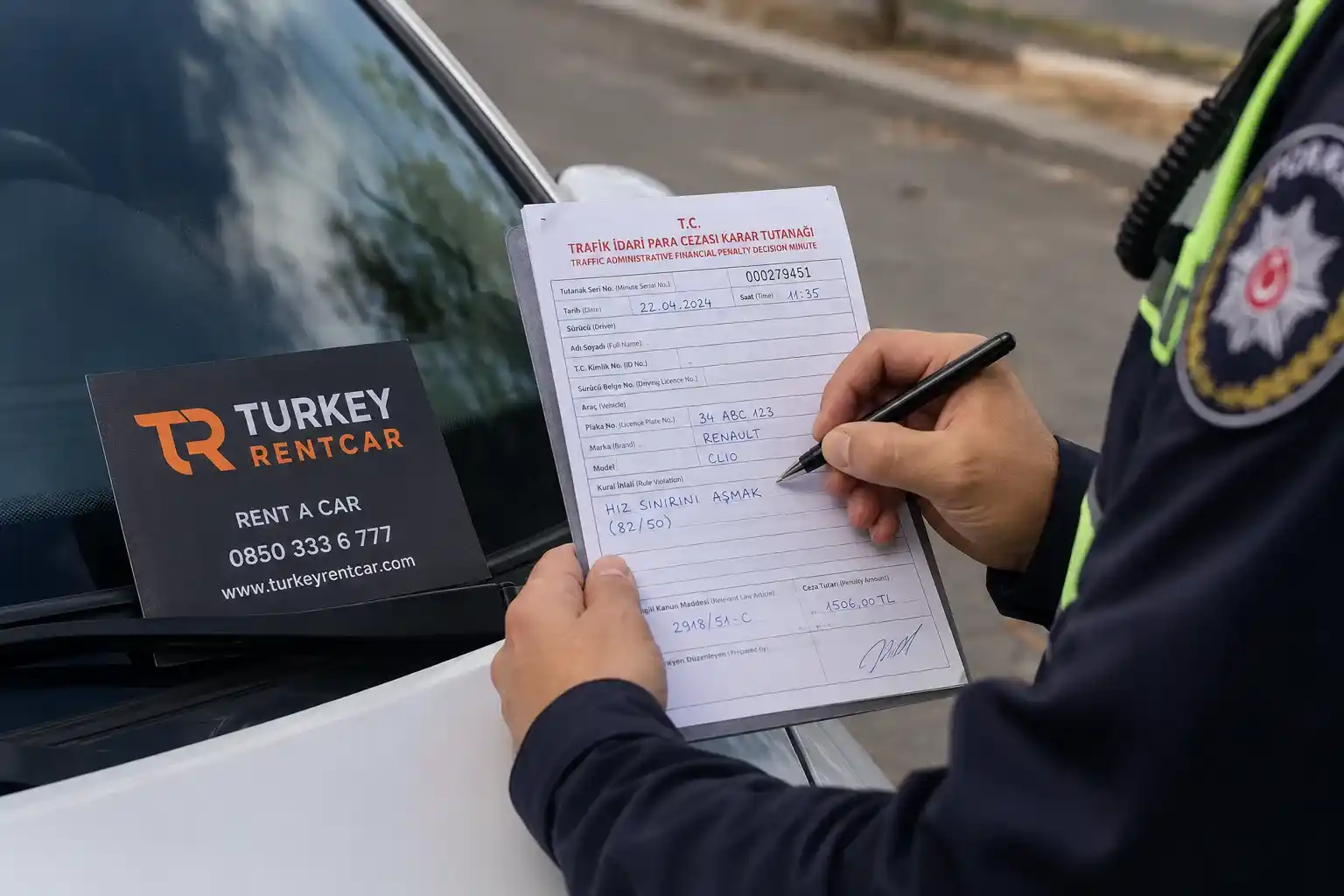
Traffic fines in Turkey are issued to the vehicle’s license plate and then passed on to the driver, including tourists using rental cars.
Speeding, red-light violations, and illegal parking are commonly detected by cameras, and rental companies can charge fines plus an administrative fee to your card even after you return the car.
Common traffic fines include substantial penalties for speeding, running red lights, using a phone while driving, and wrong parking.
How are fines charged to rental customers?
- Fine is issued to license plate and recorded in national system
- Rental company receives notification as vehicle owner
- Company charges renter's card + admin fee
- Notification may arrive weeks after trip ends
Paying fines early can sometimes reduce the amount, but ignoring them can lead to interest and legal follow-up.
Quick example: Speed camera fine
Scenario: Tourist exceeds speed limit by 20% on highway near Antalya.
Process: Camera captures plate. Fine sent to rental company 2 weeks later. Company charges €50 fine + €25 admin fee to tourist's card.
Tip: Use cruise control and watch for camera signs to avoid surprises.
How Do Traffic Fines Work in Turkey for Tourists?
Traffic fines in Turkey are issued to the vehicle’s license plate and then passed on to the driver, including tourists using rental cars. Speeding, red‑light violations, and illegal parking are commonly detected by cameras, and rental companies can charge fines plus an administrative fee to your card even after you return the car.
Quick Answer
Common traffic fines in Turkey in 2026 include substantial penalties for speeding, running red lights, using a phone while driving, and wrong parking. Fines are linked to the license plate and recorded in national systems, so rental companies receive notifications and then charge the renter according to the rental agreement. Paying fines early can sometimes reduce the amount, but ignoring them can lead to interest, legal follow‑up, and problems with future rentals.
Contents

Common Traffic Violations
The most common traffic violations affecting tourists in Turkey involve speeding, red‑light violations, improper parking, and using a phone while driving. Turkey’s updated traffic law and 2026 fine schedule impose higher penalties for these behaviors to discourage risky driving.
- Exceeding speed limits, especially on highways and near cities
- Running red lights and ignoring traffic signs
- Wrong or illegal parking, including blocking traffic or reserved spaces
- Using a mobile phone while driving without a proper hands‑free system
More serious offenses such as drunk driving, dangerous maneuvers, or driving without a license carry very high fines and can lead to license suspension and other sanctions.
Speed Camera Fines
Speed limits in Turkey are enforced by fixed cameras, average‑speed systems, and mobile radar checks. Fines increase with the percentage above the legal limit, and 2026 amounts have been adjusted upward compared with previous years.
| Speed Violation (above limit) | Indicative 2026 Fine Level* |
|---|---|
| 10–30% over the limit | Low tier fine level in the Turkish Lira range listed for speeding 10–30%. |
| 30–50% over the limit | Mid‑tier fine level, significantly higher than the first bracket. |
| More than 50% over the limit | High‑tier fine level, among the most expensive standard violations. |
Because many speed checks are automated, tourists often only discover violations later, when the rental company receives a notification and forwards the fine.
Parking Penalties
Parking regulations in Turkey are enforced both by on‑street officers and by cameras in some locations. Wrong or illegal parking is punished with standard fines, and extra penalties can apply when a car blocks disabled spots, bus stops, or emergency lanes.
- Wrong parking carries a standard fine level in the 2026 schedule.
- Blocking disabled parking or emergency lanes leads to higher, more serious penalties.
- Repeated parking violations can accumulate and be linked to the plate and owner.
Tourists can avoid most parking fines by using marked parking areas, reading local signs carefully, and following tips from hotel staff about safe places to leave the car.
How Tourists Pay Fines
Traffic fines in Turkey are registered in national databases and linked to the vehicle’s license plate. For rental cars, this means the fine is first delivered to the rental company as the registered owner, and then redirected to you as the renter.
- Fines can be paid online, at tax offices, and via authorized payment channels, often with a discount for paying within a set period (for example, within 15 days).
- Tourists driving private vehicles can pay directly using official channels once they know the fine details.
- In rental cases, the company may either ask you to pay yourself or pay on your behalf and then charge your card.
Early payment often reduces the fine amount, so handling tickets promptly is financially beneficial and avoids interest or additional administrative fees.
Can Rental Companies Charge You?
Yes, rental companies in Turkey can charge you for traffic fines related to your rental period, based on the rental agreement you sign. Under Turkish law, fines are first issued to the vehicle’s registered owner, which is normally the rental company, but the renter is contractually responsible for violations committed while using the vehicle.
- The fine is issued to the plate and notified to the rental company as owner.
- The company allocates the fine to the renter based on rental dates and contracts.
- An extra service or processing fee is often added for handling the fine.
If a renter refuses to pay, companies can pursue legal follow‑up, charge the card used for the rental, and in some cases add the unpaid balance to future internal blacklists.
Traffic Fines in Turkey at a Glance
| Violation Type | 2026 Fine Level (Overview) |
|---|---|
| Speeding (10–30% over) | Lower‑tier speeding fine in Turkish Lira, enforced mainly by cameras. |
| Speeding (30–50% over) | Mid‑tier speeding fine, significantly higher than the first bracket. |
| Speeding (>50% over) | High‑tier speeding fine, among the most expensive common violations. |
| Wrong / illegal parking | Standard parking fine level for 2026. |
| Using a phone while driving | Substantial fine, with possible escalation for repeat offenses. |
Real‑World Experience With Fines
Travelers and rental companies report that most fines affecting tourists come from automatic cameras rather than direct police stops, especially for speeding and parking. Many renters only learn about a fine days or weeks after returning the car, when the company receives formal notification and charges the registered card.
Guides for 2026 emphasize that respecting limits, not using phones while driving, and parking only in marked areas are usually enough to avoid fines altogether, making driving in Turkey straightforward for tourists who follow the rules.
FAQ
Traffic fines in Turkey are set by national law and updated annually, with separate amounts for different violations such as speeding brackets, red‑light running, phone use, and parking offenses.
Not always. Camera‑based fines are processed later and sent to the vehicle owner, so as a tourist in a rental car you may only find out after the rental company receives the notification.
Ignoring fines is not recommended. Rental companies can still charge your card and may pursue legal follow‑up or additional fees if fines remain unpaid.
Follow posted speed limits, respect red lights and signs, avoid phone use while driving, and park only in legal spaces. These simple steps prevent the vast majority of fines.
Yes, fines can be taken from your deposit or charged to your card after the rental. Some companies use the deposit only as security and then charge fines separately according to their terms.
Drive in Turkey and Avoid Fines
Choose a reliable rental car and follow local traffic rules to enjoy Turkey’s highways and coastal roads without unexpected fines and extra costs.
Read the Driving Rules Guide